GreenForm
We are a consulting firm, specializing in climate-smart agricultural practices, with a particular focus on urban and controlled environment farming.


"Solar-Powered Growth, Sustainable Harmony"
As a future customer, choosing between Venlo-type and Chinese-type greenhouses means selecting a solution that best supports your production goals, climate conditions, and budget. The Venlo-type greenhouse offers you a high-performance, modern structure with excellent light transmission, precise climate control, and long-term durability—ideal if you are aiming for intensive, large-scale, and technology-driven cultivation. The Chinese-type greenhouse, on the other hand, gives you a cost-effective and energy-efficient option, using passive solar heating and strong thermal insulation to reduce operating costs while maintaining stable growing conditions, especially in colder regions. By having access to both greenhouse types, you benefit from flexible choices tailored to your needs, ensuring reliable yields, efficient operations, and a structure that grows with your business.


Integrated Solar Greenhouse (ISG) with Advanced Strategies:
An Integrated Solar Greenhouse (ISG) is a highly sustainable and energy-efficient farming system that combines renewable energy technologies with greenhouse operations. This system uses various strategies like solar panels, photovoltaic cells, geothermal energy, and water tubes to optimize energy use, improve crop yields, and reduce the environmental impact of conventional agriculture. The primary objective of an ISG is to create a self-sustaining environment for growing crops by harnessing natural resources efficiently.
-
Photovoltaic Systems: Solar panels (photovoltaic cells) are installed on the roof or walls of the greenhouse to capture sunlight and convert it into electricity. This electricity can be used to power fans, pumps, lighting systems, and other equipment inside the greenhouse, reducing reliance on external energy sources and lowering operational costs.
-
Solar Thermal Systems: Solar thermal collectors are used to harness the sun's heat to regulate the temperature inside the greenhouse. These systems can be integrated into the greenhouse’s structure to collect and store heat, which can then be used during colder months to maintain a consistent growing environment, enhancing the efficiency of energy use.
-
Geothermal Energy: Geothermal systems take advantage of the earth's natural heat. By drilling wells and using geothermal pumps, warm water can be brought up from the earth’s crust to heat the greenhouse during the winter months. This method offers a stable and renewable source of heat, providing consistent temperature regulation and reducing the need for fossil fuels or other energy sources.
-
Water Tubes and Thermal Mass: Water tubes are integrated into the greenhouse's structure to act as thermal storage. These tubes absorb and store heat during the day, which can then be released at night to maintain a stable internal climate. This strategy helps reduce temperature fluctuations, ensuring optimal growing conditions for plants, particularly in regions with extreme temperature variations.
By combining these strategies, the ISG creates a highly efficient and sustainable agricultural environment that minimizes energy consumption and operational costs while maximizing crop production.


Multitrophic Systems in Agriculture:
A Multitrophic System (MTS) in agriculture refers to a farming system that involves the cultivation or management of multiple species across different trophic (feeding) levels, creating a more diverse and sustainable ecosystem. In such systems, various species—such as plants, herbivores, carnivores, and decomposers—are interrelated and function together to create a balanced environment that supports the health and productivity of the farm.
For example, in aquaponics, fish (primary producers) are raised alongside plants, with the waste from the fish providing nutrients for the plants, which in turn help filter the water for the fish. Similarly, agroforestry combines crops and trees, and polyculture can include a mix of plants that benefit each other. The idea is that each organism at different trophic levels supports the others, enhancing biodiversity, reducing pest pressures, increasing nutrient cycling, and improving the resilience of the farming system.
By mimicking natural ecosystems, multitrophic systems promote sustainability by reducing the need for synthetic inputs like fertilizers and pesticides, improving resource use efficiency, and fostering ecological balance.

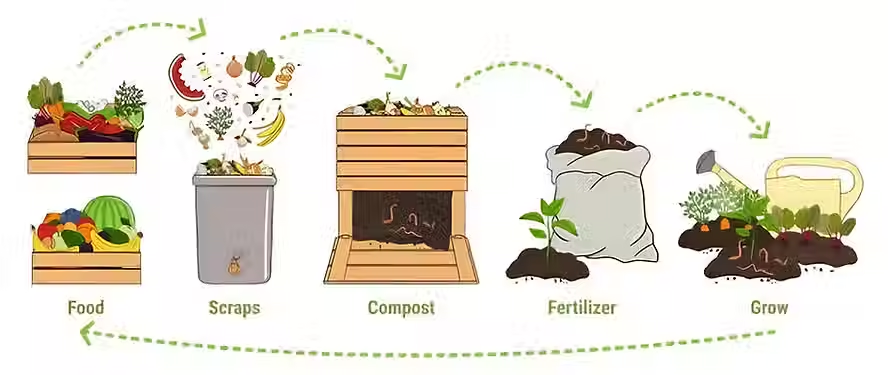
Vermiculture refers to the practice of intentionally cultivating worms, particularly for use in composting systems known as vermicomposting. In this process, worms are raised in gardens and farms to break down organic material. As they digest, beneficial microbes are transferred from the worms' digestive system into their excrement, known as castings. When these castings are added to soil or mixed into compost, they continue to help decompose organic matter.
Rich in nutrients, worm castings act as a natural fertilizer, and when steeped in water, they create compost tea. Vermicomposting not only boosts soil productivity and carbon content, but it also helps prevent plant diseases.
This method can be used to divert organic waste from landfills, and in some cases, it is effective for treating certain hazardous wastes. Whether practiced at home, on small farms, or in large-scale commercial facilities, worm-based composting plays a significant role in reducing methane emissions and revitalizing soil health.